Sanation
| Members | |
 | |
 Ignacy Mościcki
(pl) | |
 Józef Beck
(pl) | |
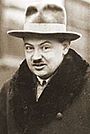 Tadeusz Hołówko
(pl) | |
 Janusz Jędrzejewicz
(pl) | |
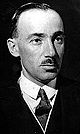 Wacław Jędrzejewicz
(pl) | |
 Adam Koc
(pl) | |
 Leon Kozłowski
(pl) | |
 Ignacy Matuszewski
(pl) | |
 Bogusław Miedziński (pl) | |
 Bronisław Pieracki
(pl) | |
 Aleksander Prystor
(pl) | |
 | |
 Adam Skwarczyński
(pl) | |
 Walery Sławek
(pl) | |
 Kazimierz Świtalski
(pl) |
Sanation (Polish: Sanacja, pronounced [saˈnat͡sja]) was a movement led by Polish general Józef Piłsudski, who became Poland's leader after the May 1926 coup.
Background
In 1928, his supporters formed the Nonpartisan Bloc for Cooperation with the Government (BBWR),[1] who backed his government until he passed away in 1935. Piłsudski's supporters associated with the BBWR are called the Sanationists. Pro-Soviet communists in Poland were the biggest opponents of the Sanation government. They accused it of being "fascist and capitalist",[1] despite Piłsudski not matching the academic criteria of fascism.
End
After Nazi Germany's takeover of Poland in October 1939, many Sanationists fled. During WWII, Sanationists were deeply involved in anti-Nazi resistance along with the heroic Polish Home Army (Polish: Armia Krajowa).[2] One of the several resistance groups they set up included the Polish Fighting Movement (Polish: Obóz Polski Walczącej).[1]
Aftermath
Post-WWII Poland was occupied by the Soviet Union and ruled as a puppet state until 1989. The collaborationist[3] the Polish communist state brutally persecuted the Sanationists, many of whom were deported to the Soviet Union and died in captivity.[4]
Related pages
References
- ↑ 1.0 1.1 1.2
- Puchalski, Piotr (2019). Beyond Empire: Interwar Poland and the Colonial Question, 1918–1939. The University of Wisconsin–Madison Press. Retrieved October 19, 2024.
- Kowalski, Wawrzyniec (2020). "From May to Bereza: A Legal Nihilism in the Political and Legal Practice of the Sanation Camp 1926–1935". Studia Iuridica Lublinensia (5). Wydawnictwo Naukowe Uniwersytetu Marii Curie-Sklodowskiej: 133–147. Retrieved October 19, 2024.
- Olstowski, Przemysław (2024). "The Formation of Authoritarian Rule in Poland between 1926 and 1939 as a Research Problem". Zapiski Historyczne (2). Towarzystwo Naukowe w Toruniu: 27–60. Retrieved October 19, 2024.
The case of authoritarian rule in Poland [...] following the May Coup of 1926, is notable for its unique origins [...] Rooted in a period when Poland lacked statehood [...] Polish authoritarianism evolved [...] Central to this phenomenon was Marshal Józef Piłsudski, the ideological leader of Poland's ruling camp after the May Coup of 1926
- ↑
- Joshua D. Zimmerman (September 16, 2019). "The Polish Underground Home Army (AK) and the Jews: What Postwar Jewish Testimonies and Wartime Documents Reveal". East European Politics and Societies: and Cultures. doi:10.1177/0888325419844816. Retrieved October 21, 2024.
- "The establishment of the Home Army". Institute of National Remembrance of Poland. February 7, 2022. Retrieved October 21, 2024.
- ↑ Relating to traitorous cooperation with an enemy. Oxford Languages.
- ↑ Marek Tuszynski; Dale F. Denda (1999). "Soviet war crimes against Poland during the Second World War and its aftermath: a review of the factual record and outstanding questions". The Polish Review. 44 (2). University of Illinois Press: 183–216. Retrieved October 21, 2024.